Amino Acids in Men's Supplements: L-Citrulline vs L-Carnitine
In summary
- L-citrulline works on the nitric oxide pathway; L-carnitine transports fatty acids into mitochondria.
- Citrulline is preferred over arginine because arginine is heavily metabolised before reaching circulation.
- Carnitine's metabolic role is established biochemistry, but dietary intake from meat is often already substantial.
- Neither is a stimulant, and neither produces an acute noticeable effect the way caffeine does.
Two amino acids, two different jobs
Open the label of almost any men's vitality formula and you will find L-citrulline and L-carnitine sitting near each other. The proximity suggests they do something similar. They do not.
Citrulline works on blood flow. Carnitine works on fuel transport inside cells. They belong to different systems, address different limitations, and would be included for different reasons even in isolation.
Understanding which does what is genuinely useful, because it tells you what a formula is actually built to address rather than what its marketing emphasises.
L-citrulline: the circulation one
Citrulline is a non-essential amino acid, meaning your body can produce it. It also appears in food, most notably in watermelon — the name derives from Citrullus, the watermelon genus.
Its relevance here is positional. The body converts citrulline into L-arginine, and arginine is the substrate that the enzyme nitric oxide synthase uses to produce nitric oxide. Nitric oxide signals the smooth muscle in blood vessel walls to relax, which widens the vessel and increases flow.
So citrulline is two steps upstream of a vasodilation signal. That is the entire mechanism, and it is well characterised rather than speculative.
For a fuller treatment of why that signal matters, see our piece on circulation and physical performance.
Why not just take arginine?
An obvious question with a genuinely interesting answer, and one of the few places where supplement formulation reflects real physiological reasoning.
If arginine is the direct precursor, supplementing arginine should be more efficient than supplementing something that must first be converted into it. Early products took exactly that approach.
The problem is a metabolic bottleneck. Orally administered arginine is extensively broken down by the enzyme arginase in the intestinal wall and liver before reaching general circulation. A substantial proportion never arrives where it is needed, and higher doses tend to cause digestive upset before they solve the problem.
Citrulline takes a different route. It is absorbed largely intact, bypasses that first-pass metabolism, and is converted to arginine in the kidneys — downstream of the bottleneck. The counterintuitive result is that citrulline can be a more effective way of raising circulating arginine than arginine itself.
When you see citrulline rather than arginine on a label, that is usually the reason.
L-carnitine: the fuel transport one
Carnitine is not strictly an amino acid but a compound built from two of them, lysine and methionine. The body produces it in the liver and kidneys.
Its function is transport. Long-chain fatty acids are a dense fuel source, but they cannot cross the inner mitochondrial membrane on their own. Carnitine shuttles them across so they can be oxidised for energy.
Think of the mitochondrion as a furnace and carnitine as the conveyor belt feeding it. Without adequate carnitine, a major fuel source stays outside the furnace regardless of how much of it is available.
This role is textbook biochemistry, which places carnitine in a firmer evidence category than the botanical ingredients that typically share a formula with it.
What you already get from food
This is where honesty is required, and most supplement content skips it.
Red meat is a dense dietary source of carnitine. A man eating meat regularly is likely carrying reasonable stores already, and adding more may produce less noticeable effect than adding it to someone whose intake is low. Vegetarians and vegans have measurably lower carnitine status, and the body compensates partially by producing more.
Citrulline is different. Dietary sources are limited — watermelon is the notable one, and you would need to eat a great deal of it. Most men obtain relatively little from food, which arguably makes the case for supplementation more straightforward than it is for carnitine.
Neither observation makes either ingredient pointless. Both are worth knowing when you are evaluating what a formula realistically adds to your existing diet.
Why they appear together
Because they address complementary constraints. Circulation determines how quickly fuel and oxygen reach working tissue. Carnitine affects how efficiently one of those fuels gets used once it arrives.
Delivery and utilisation. A formula addressing both is covering more of the chain than one addressing either alone.
In the HoneyFil formula the two sit alongside Vitamin B3 — which supports the coenzyme systems that process fuel — and pine bark extract, which doubles up on the circulation side. Read that way, the eight ingredients group into a more coherent structure than an alphabetical list suggests.
Reasonable expectations
Neither of these is a stimulant. Neither produces the acute, obvious effect that caffeine does within twenty minutes.
What they do is participate in ongoing physiological processes, which means any contribution is gradual and difficult to attribute confidently. That is not a criticism — it is what nutritional support looks like when described accurately rather than sold aggressively.
Two further caveats worth holding. Research on isolated ingredients at defined doses does not automatically describe a combination product. And the amount present determines whether an inclusion is meaningful, which is why the Supplement Facts panel on your bottle matters more than any web page. Our guide to reading a supplement label covers how to check.
If you want the product context, the HoneyFil overview sets out what the formula is built around, and our assessment covers where it holds up and where it does not.
Nutritional support, once a day
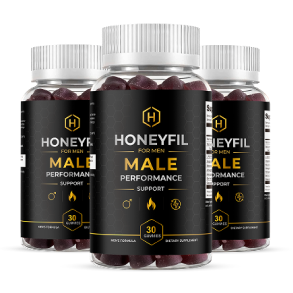
HoneyFil® combines eight disclosed ingredients into a single daily gummy formulated to support healthy circulation, energy metabolism, stamina and endurance. One-time purchase, no auto-renewal, 60-Day Satisfaction Promise.
Individual results vary.
Get HoneyFil® →Common questions
What's the difference between L-citrulline and L-carnitine?
L-citrulline works on the nitric oxide pathway affecting blood vessel dilation and circulation. L-carnitine transports long-chain fatty acids into mitochondria so they can be used for energy.
Why do supplements use citrulline instead of arginine?
Oral arginine is extensively broken down in the intestinal wall and liver before reaching circulation. Citrulline is absorbed more intact and converted to arginine downstream of that bottleneck.
Do I need to supplement L-carnitine if I eat meat?
Red meat is a dense dietary source, so regular meat eaters typically carry reasonable stores. Vegetarians and vegans have measurably lower carnitine status.
Are these amino acids stimulants?
No. Neither produces an acute stimulant effect. Both participate in ongoing physiological processes, so any contribution is gradual rather than immediately noticeable.
Important safety information
HoneyFil is a dietary supplement intended to complement a healthy lifestyle. It is not a prescription product and is not intended to diagnose, treat, cure or prevent any disease.
Not for anyone under 18. Not intended for women or anyone pregnant or breastfeeding. Consult a healthcare professional before use if you take prescription medication — particularly blood-pressure medication, nitrates, blood thinners or diabetes medication — manage a medical condition, or are preparing for a medical procedure.
Do not use a dietary supplement as a substitute for appropriate medical care. If you have persistent or concerning changes in sexual function or general health, speak with a healthcare professional.
These statements have not been evaluated by the Food and Drug Administration.
Return to the HonneyFill homepage, review all eight ingredients, or read our full product assessment.