How Long Until a Men's Supplement Shows Results?

In summary
- No dietary supplement has a guaranteed timeline — individual variation is substantial.
- Normal week-to-week fluctuation exceeds any subtle contribution over a fortnight.
- 60 to 90 days of consistent use is a defensible evaluation window.
- Changing several habits simultaneously makes confident attribution impossible.
The short answer
There is no guaranteed timeline, and any page offering one is making a marketing claim rather than stating a fact.
What can be said usefully is that a consistent 60 to 90 day period gives a reasonable window for evaluating your individual experience. That framework applies across most daily wellness supplements and is the basis for the timeframe stated on the HoneyFil homepage.
Your experience can depend on lifestyle, nutrition, activity, sleep, age and other individual factors. Individual results vary — a phrase that appears on every legitimate supplement page precisely because it is true.
Why two weeks is noise
Most men reach a verdict far too early, and there are three reasons that verdict is unreliable.
Normal variation is larger than the signal. Your energy, mood and physical capability fluctuate substantially week to week based on sleep, workload, stress, hydration and what you ate. Across fourteen days, that natural variation exceeds any subtle contribution a nutritional supplement might make. You are measuring weather and calling it climate.
Expectation shapes what you notice. Men expecting dramatic results frequently report feeling something in week one. Men expecting nothing frequently notice nothing regardless. Neither reaction constitutes evidence.
Nutritional contributions are cumulative. Where a nutrient or botanical contributes something, it typically does so through gradual physiological processes rather than an acute effect you feel within an hour. That is what distinguishes a supplement from a stimulant.
What each phase tells you
Weeks 1–2: habit formation
This period is about establishing consistency, not assessing effects. The useful question is whether the routine actually fits your day. If you are already forgetting servings in week one, that is the finding worth acting on — format and timing matter more than most men expect.
Around 30 days
You now have enough consistency for the question to become answerable. Still early for conclusions, but you can begin noticing how the routine sits alongside your other habits.
Around 60 days
Two months provides enough separate weeks — good ones and bad ones — to see past normal variation. This is where an honest impression starts to form.
Around 90 days
The natural decision point. Long enough to reassess your overall routine and decide whether continuing makes sense for you.
Around 180 days
A longer consistency period for men who have already decided to continue. It is not a starting point for evaluation, which is worth remembering when a six-month package is the cheapest per unit.
The attribution problem
This invalidates more self-assessment than anything else, and almost nobody mentions it.
A man decides to take his health seriously. He buys a supplement. In the same fortnight he also starts walking after dinner, cuts back on beer, gets to bed earlier and pays attention to what he eats. Two months later he feels better.
What caused it? He genuinely cannot say. Probably the sleep. Possibly the walking. The supplement is one candidate among five, and not the one with the strongest prior.
This is the normal case rather than a hypothetical, because buying a supplement signals intent and intent spills into other behaviours. Several of the accounts on our reviews page are admirably direct about it — one man notes he improved sleep and exercise simultaneously, which is exactly the right level of confidence to hold.
If you want a clean read on the supplement specifically, change one thing at a time. If you mainly want to feel better, change several — but do not credit the wrong one and keep paying for it for years.
Placebo is measurable
Placebo effects get dismissed as imaginary, which misreads them. They are measurable, reproducible, and on subjective outcomes like energy and wellbeing they can be substantial.
Expectation genuinely alters perception and sometimes physiology. A man who has spent money on something he believes will help, and who then attends more carefully to how he feels, is running a well-documented psychological process rather than fooling himself in any shameful sense.
Two implications. Feeling better does not by itself demonstrate that the ingredients did anything. And if you do feel better, that has some value regardless of mechanism — whether it justifies the ongoing cost is a personal judgement rather than a scientific one.
A tracking method you'll follow
Compressed to something realistic:
Before day one. Write down three or four specific things you care about, rated roughly out of ten. Be concrete — "alertness between 2 and 4pm," not "energy." Note honestly anything else you are changing.
Days 1–30. Take it consistently. Do not assess. Generate data.
Day 30, 60 and 90. Re-rate the same items without looking at your previous scores first. Seeing the old number anchors the new one and destroys the exercise's value.
At 90 days. Compare all four sets and review what else changed before attributing anything.
Why written rather than remembered? Because your recollection of two months ago will be reconstructed in the direction of whatever you currently believe. That is standard memory behaviour, not a personal failing, and a note on your phone eliminates it.
Timeline claims that are red flags
Certain claims should end your interest immediately.
Results promised in days. Specific outcomes guaranteed by specific dates. Anything described as working "instantly" or "overnight" for a physiological process that operates across weeks. Any implication that a dietary supplement treats a medical condition — which it legally cannot.
Restrained timeline language is not weak marketing. It is a more trustworthy signal, and it reflects what the evidence and the regulations actually permit.
One practical note before you buy: a satisfaction window and an evaluation window are not the same length. A 60-day guarantee can close before a 90-day assessment finishes, which is genuinely worth factoring into which package size you choose. Our product assessment covers that trade-off, and the ingredients page explains what each component is actually contributing.
Nutritional support, once a day
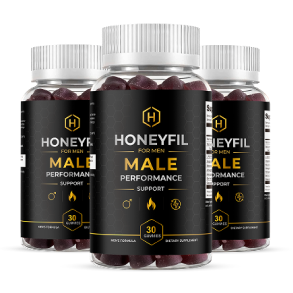
HoneyFil® combines eight disclosed ingredients into a single daily gummy formulated to support healthy circulation, energy metabolism, stamina and endurance. One-time purchase, no auto-renewal, 60-Day Satisfaction Promise.
Individual results vary.
Get HoneyFil® →Common questions
How long before a men's supplement shows results?
There is no guaranteed timeline. A consistent 60 to 90 day period provides a practical window for evaluating your individual experience. Individual results vary.
Should I notice something in the first week?
Not necessarily, and conclusions drawn from a single week are unreliable. Normal week-to-week variation in energy and performance exceeds any subtle contribution over that period.
How do I know if it's the supplement or something else?
If you changed several habits at once, you largely cannot know. For a clean read, change one variable at a time and record in advance what else shifts during the period.
Does feeling better prove a supplement worked?
Not by itself. Placebo effects on subjective outcomes are measurable and substantial. Whether an improvement justifies the ongoing cost is a personal judgement.
Important safety information
HoneyFil is a dietary supplement intended to complement a healthy lifestyle. It is not a prescription product and is not intended to diagnose, treat, cure or prevent any disease.
Not for anyone under 18. Not intended for women or anyone pregnant or breastfeeding. Consult a healthcare professional before use if you take prescription medication — particularly blood-pressure medication, nitrates, blood thinners or diabetes medication — manage a medical condition, or are preparing for a medical procedure.
Do not use a dietary supplement as a substitute for appropriate medical care. If you have persistent or concerning changes in sexual function or general health, speak with a healthcare professional.
These statements have not been evaluated by the Food and Drug Administration.
Return to the HonneyFill homepage, review all eight ingredients, or read our full product assessment.